Local group files suit against JPC and Mason Co. Fiscal Court
A rezoning recommendation for a hyperscale data center has yet to be decided by the Maysville-Mason County Joint Planning Commission (JPC) after two nights of public hearings.
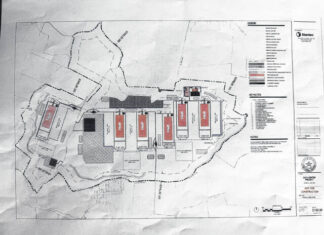
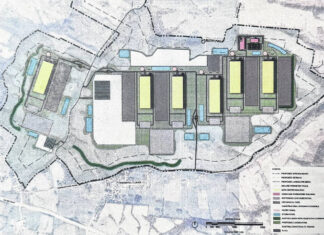
On Wednesday, March 25, and Thursday, March 26, the JPC held two nights of public hearings for an application that was filed to rezone approximately 2,080 acres of agricultural farmland to I-3 industrial.
Attorney Tanner Nichols, with FBT Gibbons, presented the application to the JPC, explaining why his client believes the land should be rezoned for a proposed hyperscale data center.
He stated that the company considering Mason County is a Fortune 50 tech company and that the proposed project is driven by economic and industrial development, claiming that the structure could potentially attract commercial activity from outside of the county.
Nichols also claimed potential investments in rural water access, up to $40 million in water and wastewater improvements, up to 2,000 trade jobs during construction, $500 million in electrical infrastructure, $15 million in road enhancements and over $1 billion in private investments in amounts over $1 billion.
Other individuals, including Hank Graddy, an attorney through W.H. Graddy and Associates, and Janet Garrison spoke on behalf of the groups Friends of Minerva and We Are Mason County.
Graddy alleged that the Industrial Development Authority (IDA), whose name is listed on the application as the applicant, is not the real party, claiming that the application is legally defective and should be dismissed. He also expressed that the Comprehensive Plan finalized by the JPC last year should be updated before re-zoning.
Garrison stated her belief that the ordinance previously passed by the Mason County Fiscal Court regulating data centers is invalid because it does not comply with the Comprehensive Plan, and that community involvement in this process is essential, noting the apparent absence of a community benefit agreement.
She then suggested creating an application fee with the Zoning Department, claiming that the development plans included in the rezoning application were “bare bones.”
Several other members of the public spoke to the JPC on subjects including potential health effects of a data center, the use of prime farmland and economic impacts of a data center.
The JPC failed to make a recommendation by the end of the second hearing on Thursday. The commission will meet again on Wednesday, April 1, at 5:30 p.m. at the Mason County Public Library to continue the discussion on the rezoning application.
On Thursday, March 26, a complaint and petition were filed by the nonprofit group We Are Mason County against the Mason County Fiscal Court, the JPC and Planning and Zoning Administrator George Larger III.
The complaint and petition allege that “there is a current and actual controversy between the plaintiff and the defendants, seeking a declaration of rights that is arbitrary, improper and illegal to adopt a data center ordinance where the Mason County Comprehensive Plan is silent regarding data centers, and where the Comprehensive Plan expressly calls for action to protect prime and important farmland when the data center ordinance fails completely to provide such protection and where the ordinance was enacted contrary to KRS 100 and in a manner that denied plaintiffs and others due process and to require the ordinance be amended to comply with the standards set forth in Resolution 25-18.”
It further alleges that the previously filed data center ordinance is illegal, and that the Comprehensive Plan “does not provide any authorization for data centers in Mason County.”
Additionally, it alleges that the Comprehensive Plan calls for the protection of prime farmland, and that the data center ordinance does not fulfill this request.
Finally, the complaint alleges that the Mason County Fiscal Court, the JPC and Planning and Zoning Administrator George Larger III have violated due process, a petition for declaratory judgement (and by doing so, have failed to update the Comprehensive Plan to address data centers) and a petition for declaration of rights (and by doing so, have failed to set standards required by Resolution 25-18).
Two articles discussing the public hearings and the filed complaint will be featured in The Ledger Independent in an upcoming print edition next week.