The City of Maysville and a handful of its employees are being sued by a Maysville business owner in association with an event that left his business without water for approximately 20 days.
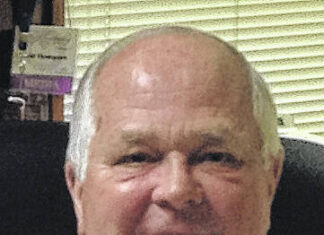
Tommy Henderson (Plaintiff), individually, and in his capacity as the owner of Auto Mart Sales & Towing, LLC, is seeking a jury trial against defendants the City of Maysville; Matt Wallingford, individually and in his official capacity as City Manager; Darin Spence, individually and in his official capacity as Utility Manager; and ten John Does in relation to an incident which occurred on or around Oct. 21, 2025.
Official court documents note that Auto Mart has been an active commercial customer through the City of Maysville’s water utility system, located at 295 Martin Luther King Boulevard.
Civil action documents allege that Auto Mart’s utility system was “current and in good standing.” They further state that Henderson separately owned a residential rental property that was located at 660 Lexington Street Extension, Unit #2 and was served by a different utility account.
According to court documents, the aforementioned residential rental property allegedly experienced billing disputes in relation to water leaks, for which Henderson sought out and received partial billing adjustments. Although partial billing adjustments were made, court documents allege that a modest balance remained on the residential account, which was said to fluctuate between approximately $124.76 and $196.39.
In the Factual Allegations portion of the court documents, it is alleged that “at no time did Plaintiffs (Henderson) receive notice that any delinquency associated with the residential rental account could or would affect water service to Auto Mart’s separate commercial location.”
They further allege that on or about Oct. 21, 2025, city utility staff internally discussed disconnecting water service to Henderson’s business, Auto Mart. It further reported that this was not done because of any delinquency on Auto Mart’s account but was done “as leverage to collect the unrelated balance on Mr. Henderson’s residential rental account.”
It then alleged that Spence, acting as Utility Manager, approved the decision to disconnect water services to Auto Mart despite their account being up to date.
Court documents state that on or around Oct. 22, 2025, the City of Maysville shut off water service to Auto Mart. The shutoff notice allegedly cited the residential account as the reason for the disconnect and assessed a reconnection fee.
It further alleged that Henderson, as the Plaintiff, was given no advance notice of the shutoff and therefore had no opportunity to contest the decision or have a hearing before the water service to Auto Mart was terminated.
According to the Factual Allegations listed in the court documents, the water remained shut off for approximately 20 days, during which “Auto Mart was unable to operate lawfully or safely as a business open to the public.”
It further states that, as a direct result, Henderson suffered “substantial lost sales, reputational harm, and operational disruption,” with damages exceeding the “jurisdictional minimum” of the court.
Court documents note that the City of Maysville’s ordinances permit water disconnection for delinquencies associated with the specific service address and account in question. They further allege that they do not authorize “cross-property shutoffs” in an effort to collect unrelated debts.
It further stated that after being alerted that Auto Mart’s commercial account was current, the Defendants allegedly continued to refuse prompt restoration of water service to Auto Mart despite knowing that without water the business would not be lawfully allowed to operate.
During a public City Commission meeting held on Nov. 13, 2025, Wallingford acknowledged the shutting off of the water service to Auto Mart and expressed that it was a mistake. Despite this, court documents allege that he “failed to promptly remedy the harm or compensate Plaintiffs for their losses.”
These documents further claim that at all relevant times, Wallingford, as City Manager of the City of Maysville, “possessed final policymaking authority with respect to the administration, supervision, and enforcement of municipal utility policies, including decisions regarding the termination of water service to commercial or private customers.”
Likewise, it states that Spence, as Utility Manager, “exercised delegated authority to approve water service disconnections and acted pursuant to City practices and directives when authorizing the shutoff at Auto Mart.”
Court documents further allege that the decision to terminate water services to Auto Mart was not a clerical error or an “isolated mistake by a low-level employee” and state that it was a deliberate enforcement decision “approved by supervisory officials acting within the scope of their authority.”
Finally, the Factual Allegations included in the court documents express that, through its policymakers, the City of Maysville “maintained and tolerated a practice of using water service termination as leverage to collected unrelated or disputed debts, notwithstanding the absence of authority for such action under City ordinances.”
It further states that by acknowledging the incident in a public City Commission meeting, Wallingford ratified the “decision-making process” that led to the shut off of water at Auto Mart, and claims that the move was “arbitrary, unauthorized by law, and taken in reckless disregard of [Henderson’s] rights and livelihood.”
Documents list five claims for relief. Count one is listed as Violation of Procedural Due Process. This count includes the following points:
Court documents state that the Plaintiffs incorporate by reference all preceding factual allegations. It states that the Plaintiffs possessed a “protected property interest” in continued water service to Auto Mart.
Count one further states that the Defendants, while acting under the color of state law, allegedly deprived Henderson without notice, hearing or meaningful opportunity to be heard. They allege that the deprivation was not random or accidental but instead resulted from “a deliberate decision approved by senior City officials exercising final authority.”
It then claims that the Defendants’ conduct allegedly “violated Plaintiffs’ rights to due process under the Kentucky Constitution and the United States Constitution.”
Count two is listed as Ultra Vires Conduct/Violation of Municipal Ordinances. The definition of “ultra vires” is “acting or done beyond one’s legal power or authority.”
This count claims that the Plaintiffs incorporate by reference all preceding paragraphs. Further, the count states that the Defendants allegedly acted outside of the scope of their “lawful authority” by shutting water off to a business whose account was not delinquent and that this conduct was “ultra vires, unlawful, and void.”
Count three is listed as Tortious Interference with Business Relationships. It begins by stating that the Plaintiffs incorporate by reference all preceding paragraphs.
Further, count three indicates that the Defendants allegedly “intentionally and improperly interfered with Auto Mart’s ongoing relationships with customers and vendors” and that the Defendants “knew or reasonably should have known” that shutting off water service to Auto Mart would disrupt their business dealings, noting that the Plaintiffs “suffered substantial damages” as a result.
The fifth count is listed in court documents as Negligence and Gross Negligence and states that the Plaintiffs incorporate by reference all preceding paragraphs.
This count alleges that the Defendants owed Plaintiffs “a duty to administer utility services in accordance with law and established procedures,” and that the Defendants breached that duty “proximately,” causing foreseeable harm.
The fifth and final count is listed as Punitive Damages and is against individual Defendants only.
This count alleges that Wallingford and Spence acted with “reckless disregard” for Henderson’s rights and states that punitive damages are warranted to “deter similar conduct in the future.”
Henderson is requesting that the court award compensatory damages “in excess of the jurisdictional minimums” of the court, as well as punitive damages against the individual Defendants as permitted by law, grant declaratory and injunctive relief, which in turn would prohibit future unlawful utility shutoffs, award reasonable attorney’s fees and costs, grant a trial by jury on all triable issues and grant all other relief to which he may be entitled.