
I am certain that I have mentioned we raised hogs and cattle a few times and we did this along with raising tobacco and corn etc… So just as we took care of the crops, it was also needed to care of the animals on our farms.
When I was little dad raised not only beef cattle but also dairy cattle as well. However, at about the first year I went to school dad sold his dairy cattle and retired from that business. From then on, he would buy and sell beef cattle only. He would buy calves at about 300 to 600 pounds and feed them out to over 1,00 pounds and then either ship them to market or sell them individually for folks to buy and have processed into freezer beef. Across the road in a field over there, he raised feeder pigs This would be a litter or two of maybe twenty to thirty pound pigs and then grain feed them until they weighed in at about 210 pounds and then send to market.
So having a good amount of cattle and pigs that kept me and Ben feeding a lot of grain to our livestock daily. With the reasons, I have already stated it was then deemed needed from time to time to have a man who would haul livestock and take either cows or pigs to a stockyard where they would be placed up for sale. There were four stockyards that I recall attending but only the one in Cincinnati was where we sold our finished cattle and of course, that was the place for the finished hogs. You see the Cincinnati stockyards were next to the Kahn’s meat companies slaughter and processing plant. Now for the cattle, they might be bought by many different bidders but it was safe to say that the hogs only got one choice and that conclusion was one that was not long for the hog to wait for.
A stockyard is an interesting place to visit but when I once wandered over to the Kahn’s area and got a whiff and a view of what was going on there I decided I needn’t wander there ever again and so I didn’t. It was one thing to go to the stockyards and have the aroma of a huge stable all around you but to go to the slaughter area reminded me of when we butchered hogs at home and I really did not care for that fragrance at all. Since that was probably the only part of the trip there that I didn’t care for it was easy to say I liked the rest. When you took a load of cattle to the yards you went to a place near the back and unloaded them down a ramp and the men working there would drive the animals down decided walkways to a holding pin that had been assigned to them. From there when it was showtime, they would again be driven down a walkway to a set of double doors. When the doors opened there was an area the cattle were moved into. It was a half moon shaped area with only enough room for them to move back and forth in as on one side rising up from the ring were a half dozen rows of seats or just benches where each row was elevated a little above the one in front of the first. From there the men sat and would bid on the animals if they so chose to do.
The reason they could bid was that on the opposite side of the ring was an n elevated bench where an auctioneer and a clerk would carry on the auction from and sell the animals. I forgot to mention that when they were in the holding pin each animal got a labeled number stuck on their rump and when sold the auctioneer would take a duplicate of that number and send it along with what the animal sold for to the office where you either paid or got paid. I must confess I liked that being paid much better than when I wrote a check for what I had bought. Now as for the hogs, I think they were tagged in lots when they arrived and sold at the day’s rate of pay for that day likewise. I say this as when I would sell a group of hogs I always got a check for all of them that would total the group.
As I had said earlier, we would attend four stockyards from time to time. I have mentioned the Cincinnati stockyards. However, sometimes we would go to Maysville stockyards to shop or the one in Wilmington and later on the Producers located up in Hillsboro. I also said we had a man who hauled our livestock and for as long as I could remember, we strictly dealt with Weldon Taulbee. Now Weldon was the best at his trade and he was the most honest man I have ever known and that has yet to change. In the business of buying and selling livestock, it is wise to understand where the livestock came from, who is selling, and who is buying. There is I think an unwritten rule in livestock dealing and that is there are no written rules. Caveat emptor is the term meaning buyer beware. This rule was one you better know well or have someone deal for you. So in my case and my dad’s before me was to have Weldon be our representative as he knew just about all of the men and their ethics and what was a fair price and how to sell your animals at a better than fair price or sometimes just a good price.
Knowing we were going to attend with what we felt was a safe setup we would move forward. Weldon would take us to different stockyards depending on what we were aiming for. To buy steers to feed we would attend Wilminton or Maysville. If looking to sell cattle we would end up in Hillsboro at the Producers’ stockyard. So on the days I attended the stockyards to buy or sell I always felt with Weldon I was in for an interesting day. Some days I did not buy a thing but Weldon would find something to buy and always at a good price. From this, I tried to learn some of the tricks to this trade. I never became a master at it and as long as I had Weldon doing my bidding I didn’t think I needed to But on a slow day in late summer or a cold and rainy day in the winter I knew I had made the right bid to ride along and watch as the bidding moved along quickly and if you weren’t paying attention it would get away from you. In addition, if you raised your hand or nodded your head you might just have bought yourself a cow!
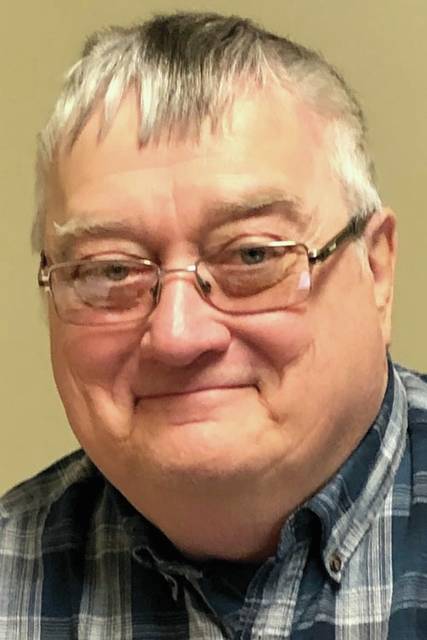
Rick Houser grew up on a farm near Moscow in Clermont County and loves to share stories about this youth and other topics. If interested in reading more from Rick he has two books out on the market for sale. Reach him at houser734@yahoo.com. Or you can write to Rick at P.O. Box 213 Bethel, Ohio 45106.
Leave a Reply