
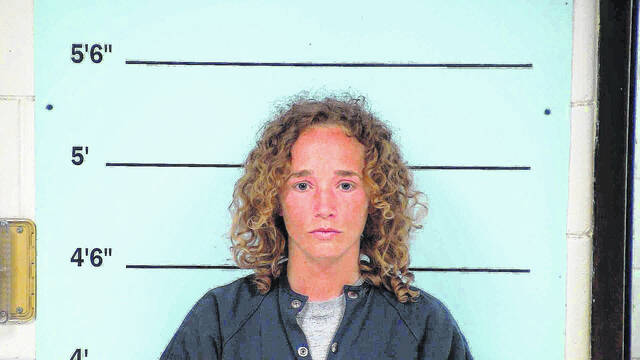
MOUNT OLIVET — On Friday, Nov. 14, doctors Timothy Allen and Scott Bender testified during a hearing at the Robertson County Judicial Center as to why they deemed Torilena Fields competent enough to stand trial.
Fields is facing charges of murder, abuse of a corpse, tampering with physical evidence, torture of a dog or cat, and obstructing governmental operations after her mother, Trudy Fields, was found deceased on her property in Robertson County in October 2024.
The attorney representing the Commonwealth first presented questions to Allen.
Allen is a forensic psychiatrist at the Kentucky Correctional Psychiatric Center (KCPC), where he has been employed since July 2003. He estimated that he had conducted more than 3000 psychiatric evaluations in those 22 years.
Allen is a non-partial court expert. He stated that he has reviewed collateral information, medical and legal records, body camera footage, educational records, social news reports, Fields’ sister’s statements and police statements from Fields’ 2024 arrest prior to his evaluation.
According to Allen, Fields arrived at KCPC on May 19, 2025, where she stayed for a total of three and a half weeks for her evaluation.
Other individuals who were around Fields during that time provided information on her day-to-day activities. She was said to be very cooperative and participated in activities, ate and slept well, and exhibited no outward signs of mental illness. Fields denied any problems and was not treated with psychiatric medication. Allen noted that she did not appear paranoid and behaved functionally.
Allen further testified that, although 90 percent of people who have stayed at KCPC have been treated with psychiatric medication, staff members did not feel it was necessary for Fields.
According to Allen, Fields informed him that she had experienced trauma and abuse in her home.
Fields denied any drug use and had no positive drug screenings in prior recorded incidents, although Allen testified that she admitted to Bender that she once tried mushrooms, molly and marijuana. He added that Fields was tested using the measures of efforts test and the color trails test. He stated that all subscales were average.
While viewing body-cam footage from the day after her arrest, Allen stated that he believed there was a potential pattern of psychosis through substances, such as “methamphetamine.” He also expressed that Fields was “clearly psychotic” while viewing body-cam footage of incidents in California.
It was noted in court that Fields suffered a motorcycle accident in California. Allen testified that records show that she was wearing a helmet and had a negative CT scan.
According to Allen, Fields’ records from California revealed several reported incidents, including her statement that she had been assaulted by her brother. In another incident, Fields was found walking in traffic while appearing malnourished. On a separate occasion, Emergency Medical Services found her unclothed in a fountain. After the latter incident, Allen stated that records showed there was a discussion of meth usage, but no proof was validated.
Allen’s evaluation of Fields included a discussion of her charges from her arrest in October 2024 in Mount Olivet. He stated that Fields understood her charges on a basic level, as well as the seriousness of the case. However, he added that he felt she was aware of what she may be sentenced with.
Fields informed Allen that she believed she could face life in prison for the murder charge but felt the other charges were “not as serious.” She added that she felt well-represented by her defense team and knew that prosecutors “should get justice.”
He further noted that Fields stated she feels as though she has been treated fairly and could potentially be offered lower charges through a plea deal. It was noted during the hearing that there was no discussion of a plea deal. Fields then expressed to Allen that she wants a favorable outcome and does not believe a trial in Robertson County would be hard.
During cross-examination, Fields’ defense attorney emphasized that she has never had drug charges filed against her and noted that at the time of her arrest in October 2024, her drug screen was negative.
Allen responded that if methamphetamines were present in Fields’ system, they mostly likely would have shown up on the drug screening conducted after her arrest, as the substance typically stays in the body between 24-36 hours depending on the person.
According to Allen, drug panels do not include every type of drug and typically screen for what are deemed “dangerous drugs.” MDMA drugs, such as molly, do not always show up.
Bender is a neuropsychologist and professor at the University of Virginia. He told the court that he has done hundreds of psychiatric evaluations and has testified 40 to 50 times, including in the state of Kentucky.
He testified that he evaluated Fields at KCPC for a total of nine hours on June 9-10 in 2025 and observed Allen’s assessment on June 11. Bender noted that he had also reviewed Fields’ medical, school and legal records before and after her October 2024 arrest.
During his evaluation, Bender conducted a clinical interview, neuropsychological tests, speech tests, vision tests, reasoning tests and a psychopathology test. Through these, he claimed he found Fields to be competent.
According to Bender, Fields showed no evidence of malingering and was reluctant to admit and minimized any potential problems. He further stated that he believed that she was trying not to shed light on those potential problems.
Bender conceded that his testing showed a disparity in percentage in her non-verbal and verbal memory. He further stated that her verbal memory was a bit low for her IQ.
However, while his testing revealed Fields’ executive function and ability to reason are low, Bender stated that he believed she fit the standards to stand trial in Kentucky. Bender further emphasized that, while she could potentially have a neurological disorder, an individual may be deemed competent regardless.
Fields’ defense attorney then asked Bender about the possibility Fields had sustained a traumatic brain injury in the reported motorcycle accident. Bender testified that it was possible that she had sustained an injury, although a CT scan completed at the hospital showed no signs of trauma.
Bender further testified that he felt the incident was a result of substance abuse; however, he stated that it was not beyond reason for it to be from something else.
“At the end, it’s just difficult to say,” he concluded.
Fields’ next court hearing was scheduled as a pretrial conference for Dec. 8.
Leave a Reply