
Metro Creative Connection
In the midst of the recent data center boom the United States has been seeing, the technology venture has now put Mason County in the ring of possibility.
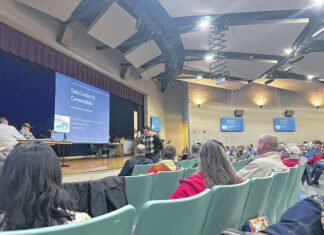
Prior to a Mason County Fiscal Court meeting held in July, public comments on a rumored data center project had not yet taken place, nor had information been relayed by county officials.
It was at a meeting on July 15 that several residents took the opportunity to express concerns about the proposed project, which had not yet been confirmed.
Max Moran, a resident of Germantown, asked the court if they had signed non-disclosure agreements for a “development, land purchases, or otherwise under terms for a data center.” Mason County Judge Executive Owen McNeill, Mason County Commissioner Joe McKay and Mason County Commissioner Chris O’Hearn all confirmed they had. Mason County Commissioner Peggy Frame said she had not.
According to Moran, people in the area had been asking questions due to concerns over the alleged secrecy of the proposed project.
Mason County Attorney John Estill responded that it was his and the Mason County Fiscal Court’s goal to be completely transparent.
“Unfortunately, there’s times when government can’t be transparent and the statutes recognize that — there’s an exception in both the open meetings and open records act for industrial or business prospects. The reason this exists is not because government wants it, but because businesses will not talk to you,” Estill stated.
McNeill commented at the July 15 meeting;
“Data centers across America in economic development are the aluminum of three to four years ago, the steel mills of seven to nine years ago and the auto manufacturers of 13 years ago. Any community that hasn’t spoken to some data center projects either doesn’t have an economic development director or isn’t even in the game.”
Four weeks later, on Aug. 13, 2025, the Mason County Fiscal Court held a regular meeting, where Maysville-Mason County Industrial Development Authority Economic Development Director Tyler McHugh provided residents with an economic update.
“We are working with a Fortune 100 technology company that develops, owns and operates large-scale technology campuses worldwide,” McHugh stated. “They are the end user, not a speculative developer, and they are recognized globally for their world-class facilities, highly skilled workforce and strong community partnerships.”
He continued;
“Their evaluation here began this past year, and the plan calls for a technology campus consisting of single-story data center buildings, class A office space, support areas, green space, parking for employees and visitors, full site utilities, landscaping and storm water management.”
McHugh explained that jobs openings for technicians, engineers, project managers, safety and security staff, logistic teams and culinary services would come with the project.
“This company’s approach to community engagement is equally strong in every location where they operate,” he stated. “They run an annual grants program for schools, registered non-profits and local organizations. These grants address critical needs and leverage technology to build strong, sustainable communities while improving STEM education.”
In a recent exchange with McHugh, he expressed that this proposed project “represents a once-in-a-generation opportunity for Mason County and the surrounding region.”
He further noted that the “company” has stated it will be compliant with local, state and federal regulations and will commit to environmental stewardship.
“I have also had the opportunity to visit a site owned and operated by the potential project team,” added McHugh. “The facilities are state-of-the-art. While there, I visited several nearby businesses within half a mile of the campus — including restaurants, hotels and a fuel station — and asked about their experiences with the facility. Each business I spoke with reported no issues related to noise, water or other impacts since the site came to their area. In fact, when standing within 100 feet of the exterior wall of the facility, I could not detect any operational noise at all.”
According to McHugh, environmental studies, including a field study for the Indiana Bat, have been conducted. He noted that if the bats need to be relocated, they will be humanely rehoused.
“We are working closely with state and local partners to make sure that, if selected, this project is a success not just for the company, but for the people who live and work here,” McHugh stated.
McNeill expressed that the “company’s” interest in Mason County largely due to the Ohio River and Spurlock Power Station.
“We know that we’re down to final stages on this after beating out hundreds of other sites across three countries,” he continued. “Just like Browning’s Manufacturing, we’re working to leverage this project into other improvements across our County. These guys have already given assurances that they’ll pay for any and all upgrades needed for their operations. That means new water lines, new water treatment facilities, new power generation and other community assets that tax dollars don’t have to pay for. They are committed to improving school systems, roads and infrastructure that we struggle to keep updated now.”
According to McNeill, he fully understands those who are skeptical. “Honestly, it took me 30 days to get my mind around this project,” he said.
He noted that he has visited a Google Technology Campus in Lancaster, Ohio, and only received positive feedback.
“Again though, I understand the skeptics as it took me a while to understand this opportunity. As a community, I’d just like to urge our citizens to not be afraid of winning and success,” McNeill concluded.
From the eyes of the landowner
Dr. Tim Grosser has owned and lived on his farm of 250 acres in Mason County for over three decades and now finds himself in the middle of this data center project.
At the beginning, Grosser stated that McNeill called him in November, proposing to buy his farm, to which Grosser said no.
“A couple of weeks later, he called again. I said no,” Grosser said. He further explained that McNeill asked him to come talk to him, to which he did.
According to Grosser, McNeill told him that a couple of farms were being looked at, including his, for what McNeill called an “industrial development.”
Grosser expressed his opinion that he did not perceive McNeill’s statement to be true, and that instead, an entire area of land was being looked at.
After telling McNeill “no” a third time, he advised him to talk to his son, Andy Grosser.
“So, he talked to Andy, went down and talked to him; same thing, he wouldn’t say what it was for. Same pitch: your farm, we’re looking at your farm and three or four others. So, we kept saying no and finally in March, he wanted Andy and I to come together to talk,” Grosser said.
He continued;
“So we went down there and talked to Tyler McHugh, a representative from this company. He said he was from Chicago, but he wouldn’t…there was no name. They wouldn’t give a name, and they wouldn’t give a name of the company and then some guy from the state of Kentucky — Frankfort, same thing — we want to buy your farm,” Grosser said.
He explained that in November, he had been offered $15,000 per acre for his farmland, which eventually increased to $35,000 per acre.
After expressing again that they did not want to sell the farm, Grosser claimed that he and his son would not be told anything unless they signed a non-disclosure agreement (NDA), to which they also refused.
According to Grosser, they were under the impression that the project would be an aluminum factory or something similar. It was only later on that he learned that it was for artificial intelligence.
“Then it all started making sense. Shortly after that, our group started,” said Grosser.
Eminent domain (a way for a government body to acquire private property through monetary transactions) was a hot topic of discussion at the meetings. Grosser claimed that the term was used to “threaten” people into agreeing to sell their land.
“These two people from the power plant came to that same person, threatened them with eminent domain and they ended up caving in and signing,” Grosser alleged.
When asked if he believed there was enough land acquired for the project, Grosser replied that they “probably got enough land to do it,” but stated that there are still people holding out, as well as individuals who he claimed have signed but would like to take it back.
“Our group people, they’re all going door to door all out through the whole county, and half the people they talk to didn’t know about it,” said Grosser.
If the project goes through, he suspects his farm will become an island.
“We have really good hunting. My grandson likes to come and hunt; he lives in Western Kentucky, deer and turkeys, all that. A couple of buddies of mine that hunt there too, so wildlife is unbelievable,” Grosser said.
He continued;
“The wildlife will be wiped out because of the noise and who knows what pollution this place is going to put in the ground. The power plant right now only has enough power to serve its customers that they have, so they’re gonna have to…they have to double their output just for this data center thing. So you can bet electric bills for this whole county, even Maysville the city, it’s gonna go up.”
When asked if he believed eminent domain could still be used on his farm, Grosser replied that he would not be surprised, but added that if they did, there would be resistance.
Grosser further claimed that those who agree to sell are receiving a check for a “land agreement” or “contract” and alleged that the checks are being signed by the Mason County Industrial Development. He also mentioned that he has attended zoning meetings and added that multiple speakers will be at the upcoming Maysville-Mason County Joint Planning Commission meeting on Sept. 3.
Grosser expressed that the drafted five-year comprehensive plan states that “all agricultural land has to stay agricultural land,” but noted that it does not include any language about data centers.
“I talked to the Chairman of the Board of Directors of the Zoning Commission, he said yeah, it’s all…has to stay agricultural, but Owen McNeill, the Judge Executive, can override us,” Grosser explained.
According to Grosser, locals are trying to stop the project. He expressed that the “bulk” of those who live in the proposed area “do not want it.”
“How can an elected representative sign a non-disclosure for one, and how can they go against the will of the people that voted them in?” asked Grosser.
He continued;
“We just don’t want the data center to be anywhere near our place. It’s an awful lot of people when they went door to door, were opposed to it,” said Grosser. “So it’s the power problem, the water problem, the noise pollution problem, wiping out the wildlife problem and whatever ground pollution could get into the water too.”
When asked what message he had for the elected officials, Grosser expressed that he wanted them to hear that they will not be re-elected “if they try to pull this off.” At least not by him and his son Andy.
Incentive for intelligence
This year, the Kentucky General Assembly passed House Bill 775, which provides tax exemptions for “qualified” data center projects.
The bill explains that the exemptions are for approved companies that have received approval from the Kentucky Development Finance Authority.
Several equipment items for a data center are included in the bill, such as servers, routers, connections, monitoring and security systems, fiber optic cabling/network equipment and machinery, hardware and additional enabling equipment.
Additional exemptions included in the bill included “equipment used in the operation of computer equipment or software or for the benefit of the data center project, including component parts, installations, refreshments, replacements and upgrades, regardless of whether the property is affixed or incorporated into real property.”
The bill continued;
“All equipment necessary for the transformation, generation, distribution or management of electricity that is required to operate computer server equipment, including substations, generators, uninterruptible energy equipment, supplies, conduit, fuel piping and storage, cabling, duct banks, switches, switchboards, batteries, testing equipment and backup generators.”
Equipment that would be used to cool and maintain “a controlled environment” for the computer servers, along with additional parts of the project, such as chillers, refrigerant piping, cooling towers, water softeners and more, are also included in the exemptions.
Capital investment will further be required for exemptions and will be determined by the proposed county’s population size.
The United States Census Bureau states that as of the 2020 decennial census, Mason County has a population of around 17,120.
According to House Bill 775, “if located in a county having a population of not more than 50,000,” a minimum capital investment of $25 million has to be made on or before the fifth anniversary of a preliminary approval.
Items that the exemptions do not include for data center projects are construction equipment and “building and construction materials permanently incorporated as an improvement to real property.”
The power behind the prospect
Behind every data center is the power that drives it. On April 30, 2025, East Kentucky Power Cooperative (EKPC) applied to the Kentucky Public Service Commission for a proposed rate tariff for data center power.
According to EKPC, this tariff (if approved) would apply, “to any centralized facility that is used primarily or exclusively for electronic information services such as the management, storage, processing and dissemination of electronic data and information (including mining of cryptocurrency) through the use of computer systems, servers, networking equipment and related components (each, a ‘data center’).”
Two requirements would have to be met by the data center to be eligible for the rate tariff, including having an expected or actual peak of energy demand of 15,000 kW or greater and an expected or actual monthly load factor of 60 percent or greater.
David Samford, General Counsel of EKPC, testified before the Public Service Commission on June 16, 2025. Samford was asked why the proposed rate was needed, to which he replied that, due to Kentucky’s favorable rate environment, the state is seeing interest from data centers.
“EKPC has been watching national trends develop and learning from the experiences of others in serving data centers. As these loads become increasingly large, EKPC’s leadership determined that it was appropriate to develop a specific tariff that anticipated the future investment of significant capital into data centers located in EKPC’s Owner Members’ service territories,” Samford testified.
He further expressed that the intention of the proposed tariff is to “identify and allocate risks” for the power company, along with its owner-members.
“The overarching goal of the Rate DCP Tariff is to minimize and, if possible, eliminate cross-subsidization of data center load and non-data center load,” Samford stated.
When asked to describe additional terms of the proposed tariff, Samford testified that EKPC would work with a data center and “develop and implement a power supply plan to support the customer’s load with: dedicated resources supplied by EKPC or the data center; bilateral power and capacity purchases,” or a combination of the resources described.
The Public Service Commission further asked him how the tariff would protect those who are in the non-data center rate classifications.
“The proposed Rate DCP tariff includes language that allocates all costs associated with serving a data center to the data center. This provision is one of the primary methods to prevent subsidization of data center loads by non-data center rate classifications. The cost recovery provisions comprehensively apply to all build-out costs, operations and other aspects of electric service,” Samford testified.
Nick Comer, External Affairs Manager of EKPC, was contacted with questions regarding the proposed rate tariff. He expressed that the power company “has been contacted by a number of developers proposing to establish data centers.”
“Due to the unique energy needs involved in many of these proposals, EKPC has taken a proactive role to engage the developers early in the process to understand their needs and EKPC’s options for meeting those needs,” Comer said.
In his response, he stated that the tariff would implement four separate requirements for data centers.
The requirements included were to:
“Assure that costs and risks are appropriately identified and allocated between new data center loads and traditional residential, commercial and industrial loads.”
“Prevent other cooperative members from paying for infrastructure, upgrades and any other costs the cooperative may incur to serve data centers.”
“Ensure data centers bear the cost of new infrastructure dedicated to their service, and provide sufficient cash flow for EKPC and the local electric distribution cooperative to provide large amounts of electricity.”
“Obtain financial protections for existing members in the event a data center closes before the end of their contract.”
Comer stated that EKPC, along with its 16 owner members, all have a legal obligation to provide electricity.
“Because EKPC and its owner-member cooperatives are based in local Kentucky communities, we have a vested interest both in seeing those communities prosper and in ensuring that all electric cooperative members are treated fairly. We recognize new and expanding businesses and industries provide new jobs, investment and tax base, which benefits local communities, surrounding regions and the state of Kentucky,” Comer stated.
Research within power
Sean O’Leary is a Senior Researcher with the Ohio River Valley Institute, a public policy think tank. In an interview with O’Leary, he expressed that the institute has been “inundated” with both questions and requests to research data centers and their likely impact.
When asked about the concern over data centers consuming a lot of energy and the resultant potential of increased electric bills, O’Leary expressed that, depending on the provisions of the proposed rate tariff from EKPC, there is a potential for that to happen.
He emphasized that he is personally not opposed to data centers, but that his concerns lie with their economic impact on the regions chosen for development.
“Especially in the last 15 years, our region has just gone through, you know, especially a little bit upriver from you in Ohio and West Virginia, have gone through massive expansions from the natural gas boom that have resulted in no measurable increase in jobs or economic prosperity,” O’Leary explained.
When asked if he believed if data centers would eventually phase out, O’Leary responded that it is a “wild debate as to whether there is a data center bubble.”
He further expressed that, due to the cost of construction, he believes that right now “is the worst possible time to be trying to build” a data center. “It’s three times what it was a couple of years ago.”
“The biggest concern that I have that I tried to communicate to the Public Service Commission, that data centers are incredibly capital-intensive and not very labor-intensive entities. They just don’t hire very many people,” O’Leary claimed.
He expressed that he does believe there is a temporary high in construction jobs for data centers, but that on the back side, you are left “with a really, really big thing that sits there.”
According to O’Leary, he researched the top half dozen companies that are dedicated solely to both building and operating a data center. “They typically average between about 20 and 60 employees per data center globally. We’re talking about hundreds of data centers, so it’s not an idle statistic,” he said.
He continued;
“One of the problems we see in the region, generally places that are wrestling with data centers, we often see conflicting claims. We see them made by the developers, simultaneously. They will say for instance, on many occasions, that there will be little or no impact on government budgets and county services. But we’re also going to have a thousand new jobs. You can’t have it both ways.”
Based on examples which can pull from, O’Leary claimed that top-line investment numbers are “almost always spectacularly misleading.”
He explained that even if a company spends a billion dollars, it is not an indication “of how much of that money is actually going to land in the local economy.”
O’Leary then provided an example, referencing the gas industry’s investment of $110 billion into eight counties in Eastern Ohio in 2008.
“Those counties have seen their population and jobs numbers drop during that period by about 10 percent. There’s been no measurable economic benefit,” O’Leary claimed.
He further stated that investments do not always show up in the local economy.
“You’ve got the investment to build this stuff, and so there’s a lot of fun in construction activity,” O’Leary said. “But probably, like the parts, the equipment, everything that they’re installing comes from someplace else.”
When asked if it was impossible for electric bills to increase, he replied that it is almost impossible.
“It’s because one of the requirements that all utilities operate under is that they have to maintain enough reserve powers so that they can respond during heat waves and other high event periods,” O’Leary explained. “And so, in order to do that, they’ve got to make sure that they’ve got a reserve of resources out there to provide them with power should they become necessary that may sit idle 90 percent of the time.”
He continued;
“The problem that data centers raise is that on one hand, when you set up a special tariff for a data center, you can do things like require them to pay a minimum monthly bill…and certainly even pay for infrastructure that might have to be built to support them.”
O’Leary stated that an additional tool utilities use is called “demand response.”
“They basically provide incentives, usually to businesses and sometimes to residential customers, to reduce their use of electricity or concentrate their use of electricity at times when it’s not at peak. And the problem that gets created is that data centers are inherently able to gain that system successfully,” he explained.
O’Leary claimed that he believes that if there is no implemented regulation requiring data centers to pay for 85 to 90 percent of their average or presumed bill, and they are allowed to take advantage of programs for demand response, those data centers are able to “tailor their consumption of electricity to take maximum advantage of those off-time rates.”
Ultimately, O’Leary stated that he does not believe there are any guarantees, even with how “big and impressive” these things are.
“And given the history of the valley and the history of data centers in particular as engines of economic development, until they can demonstrate publicly that there is a major benefit — and there could be, there absolutely could be. But we know the data center in and of itself is not going to be a major economic contributor. It may throw off a million or two million dollars a year in taxes, but it is at risk of being offset by increases in utility bills and the other services from the county,” he concluded.